
This Guitar Riff Changed Music Forever

It's January 1954 in Chicago. A Mississippi-born guitar player known as Muddy Waters walks into a recording studio with a song written by his bass player, Willie Dixon. What they laid down that day was so raw, so ahead of its time, it didn't just become a hit — it became the foundation for countless blues and rock songs throughout history.
That song was I'm Your Hoochie Coochie Man. And here's what I think most people miss about it.
It's Not Just the Notes — It's the Silence
The riff itself is four single notes of minor pentatonic perfection. But the real genius of the song isn't the notes. It's what's between them — which is to say, nothing!
Willie Dixon built this song on what some people call stop time. The band stops completely while Muddy Waters sings the verse. The instruments go silent. It's just his voice. And then — bam — the riff hits again.
That contrast between the silence and the riff is what makes it so powerful. The riff would be nothing without that space around it.
Chicago, 1954 — A World on the Verge of Something
To really understand why this riff mattered, it helps to understand the moment it was born into. In 1954, rock and roll barely existed. Chuck Berry's first record hadn't come out yet. Elvis Presley hadn't recorded anything. The Beatles were still almost a decade away. Keith Richards and Mick Jagger were 10 or 11 years old. The electric guitar — loud, amplified, the instrument we know today — was still brand new.
But something was happening on the south side of Chicago. Over the previous decades, hundreds of thousands of Black Americans had made what historians call the Great Migration — moving north from the Mississippi Delta, from Alabama, from Georgia, looking for opportunity. And they brought their music with them.

In Chicago, that music collided with technology. With electricity. Guitars got plugged into amplifiers, and suddenly the blues got loud.
Two brothers named Leonard and Phil Chess were running a small record label called Chess Records, capturing the sound of that new electrified blues world. One of the names on their roster was a man named McKinley Morganfield — better known to the world as Muddy Waters.
The Man Behind the Riff
Muddy Waters grew up on a plantation in Mississippi. As a young man he absorbed everything from the music around him, learning in part by watching Son House — one of the true giants of Delta blues — who became a kind of mentor to him.

In 1941, a musicologist named Alan Lomax traveled through the Delta recording folk musicians for the Library of Congress. He recorded Muddy Waters, who was 28 at the time. When Waters heard the playback — heard his own voice coming back through a machine — he famously said he didn't think he was that good.
Two years later, in 1943, he moved to Chicago like so many others. He played house parties (and honestly, I can't imagine how cool those parties must have been). Eventually he signed with Chess Records in 1947. Through the late '40s and early '50s, he was the man — the king of Chicago blues.
How the Riff Works
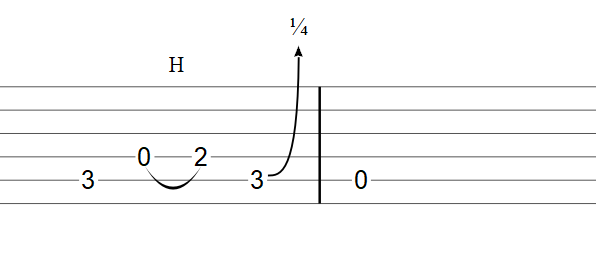
The original riff — which would likely have been played through a small Fender Tweed amp — is built on A minor pentatonic. And it's brilliantly simple. It starts on the minor third. You hammer onto the fifth. Then you walk back down the minor pentatonic scale to the root, with just the slightest bluesy bend to make it grittier, to make it cooler.
That's it. Four notes. Minor third, hammer to the fifth, walk back down to the root.
Over time, in later performances, the riff evolved. Sometimes it became a slightly different variation. Sometimes Muddy Waters even played it with a capo at the fifth fret — at which point you're essentially thinking in E minor pentatonic, open position, using the low E string to carry the whole thing. Different key, same idea. Same soul.

Legend has it that Dixon actually taught this song to Muddy Waters in a backstage bathroom at some club, and Waters wanted to memorize it right away. I believe it. It's the kind of riff that grabs you immediately.
(We cover the chorus and the outro in detail in this week's Patreon masterclass —
The British Kids Who Heard It and Changed Everything
About a decade after this record came out, a bunch of young British kids got hold of it.
Those kids eventually became the Rolling Stones, the Yardbirds, Eric Clapton, Cream. They heard these Chess Records recordings and were completely blown away — they'd never heard anything like it before.
The influence runs deeper than most people realize:
The name Rolling Stones itself came from a Muddy Waters song from 1950.
The Stones' first album included three Willie Dixon songs. A man they had never met wrote a significant chunk of their debut record.
Eric Clapton was so devoted to this music that he quit the Yardbirds when they started making what he considered pop songs. He was a blues purist — reportedly difficult to work with at the time, but he knew what he wanted: to play music like Muddy Waters.

And you can hear that lineage ripple outward into so much of 1960s rock. Not just in covers of Hoochie Coochie Man — Jimi Hendrix played it live — but in the DNA of songs those artists went on to write themselves.
Take Led Zeppelin's Whole Lotta Love. It's not exactly stop time, but it has that single-note minor pentatonic riff — Jimmy Page, you know it well — and then a static chord underneath Robert Plant's voice. Not pure silence, but that chord doesn't move. There's still that call-and-response feel. That space. You can hear where it came from.
In fact, the song was close enough in sound — and in name — to a Willie Dixon song called You Need Love that Dixon sued Led Zeppelin for copyright infringement. I believe they settled out of court.
Then there's the bridge in Cream's Sunshine of Your Love — that stop-time-like moment where the power chord hits and then you get the vocal. Yes, Ginger Baker is drumming all over the place (you probably couldn't get Ginger Baker to stop drumming even if you tried), but those concepts from Muddy Waters and Willie Dixon are right there.
Think of the entire generation that followed: John Mayall, Peter Green, Mick Taylor, Jeff Beck. A whole wave of British guitar players who went on to help define rock music, all of them inspired by the blues coming out of Chess Records.
And later still? George Thorogood's Bad to the Bone — played with slide, a little different in feel, but unmistakably in the same family tree.
The Lesson
Here's what I keep coming back to: Hoochie Coochie Man is one of the most influential guitar riffs in history, and it isn't complicated. It's not fast. It's not technically demanding.
It's four notes. The right four notes, in the right order, surrounded by the right amount of silence. Sometimes less really is more.
If this gave you a new way to think about the blues and rock, I dig into this kind of thing every week here on the blog, on YouTube, and on Patreon. I'd love to hear from you — what other riffs do you think deserve this kind of deep dive? Leave a comment below.
— Blue Morris, Vancouver 2026


